Training 1,000+ farmers to turn crop waste into biochar boosting maize yields by 20–30% while removing carbon from the atmosphere.
Bungoma County sits in the heart of Kenya's western agricultural belt rich in maize, sugarcane, and banana production, but also generating vast quantities of crop residue that is typically burned openly, releasing carbon and degrading local soils.
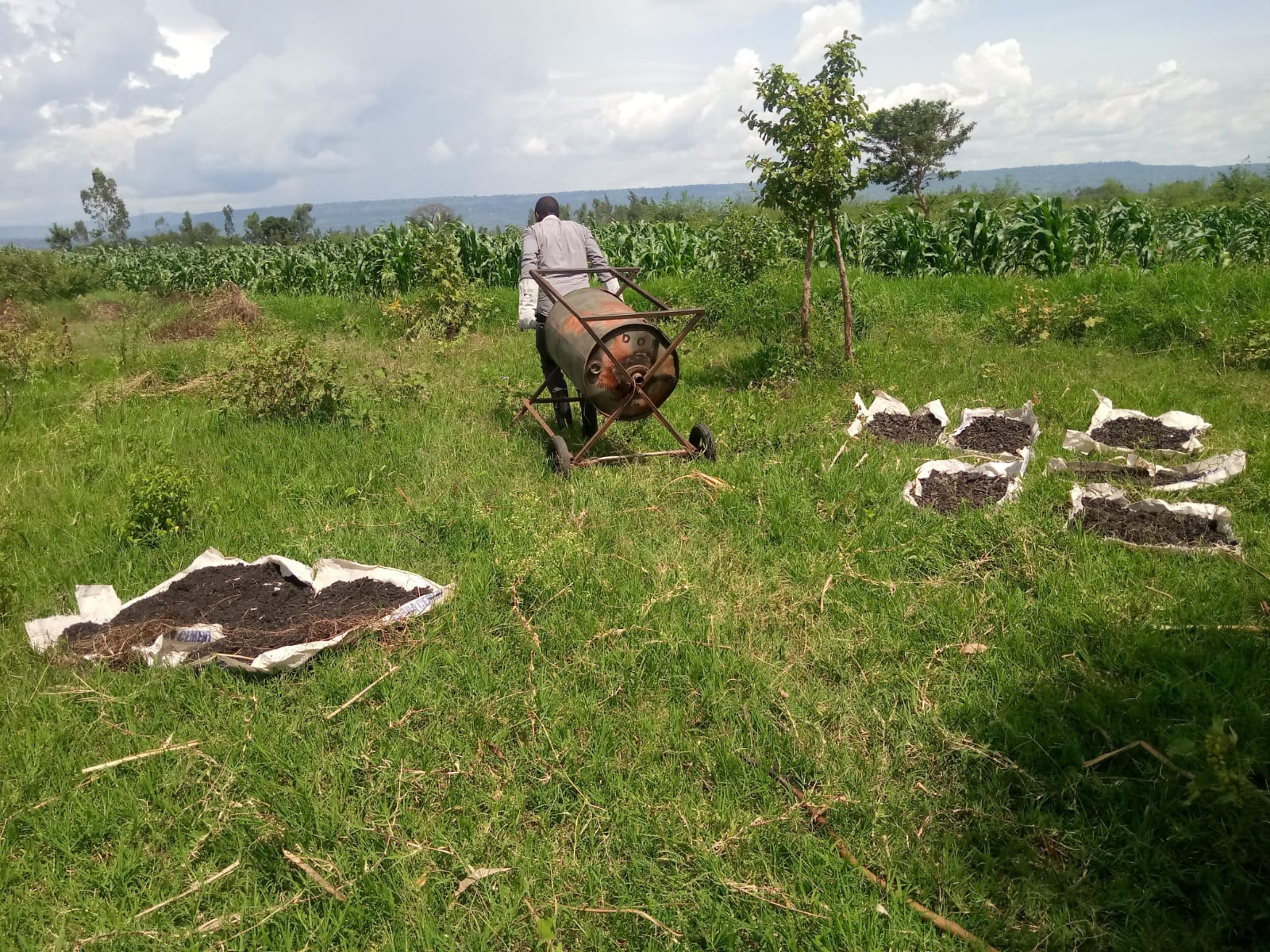
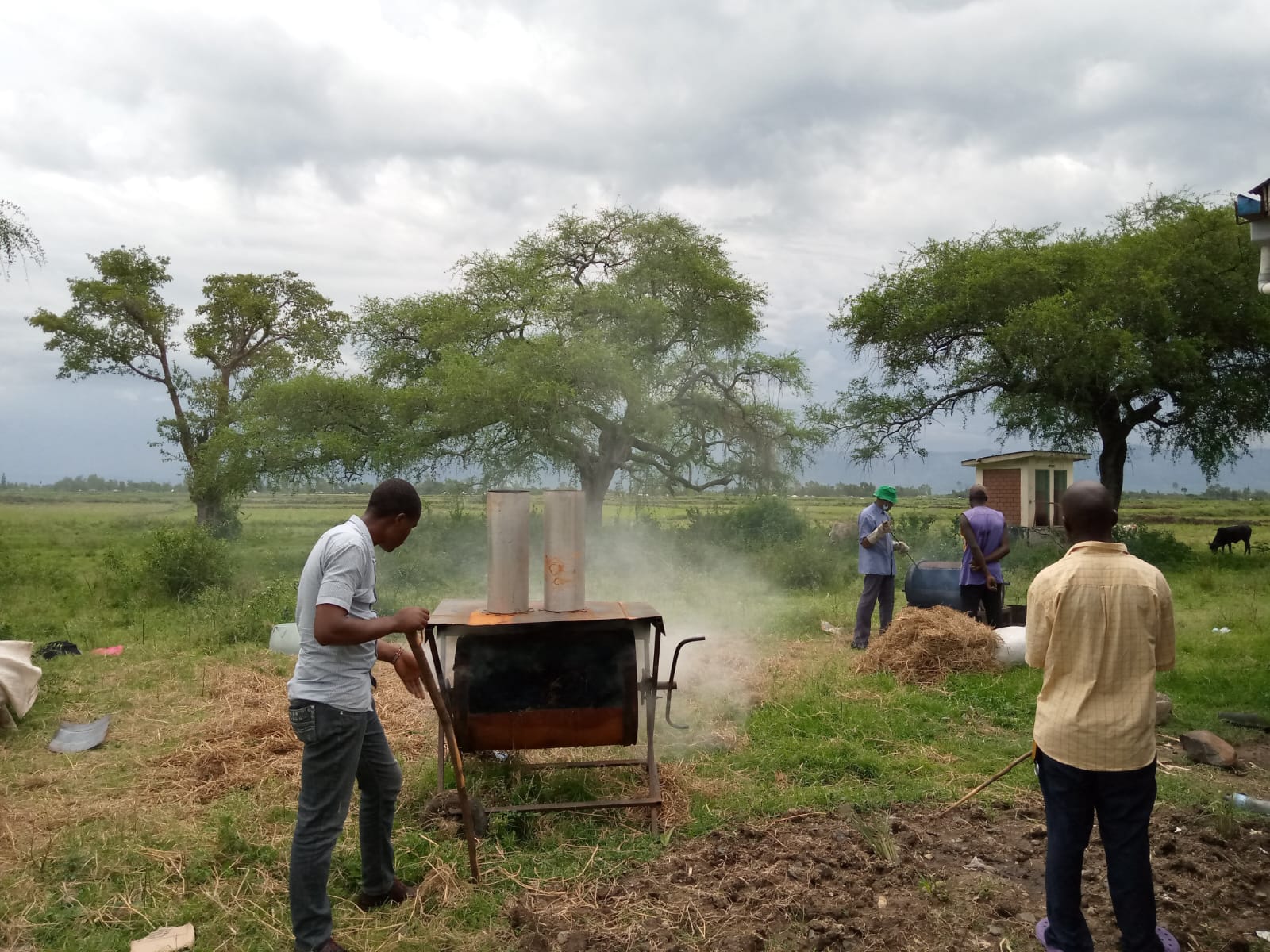
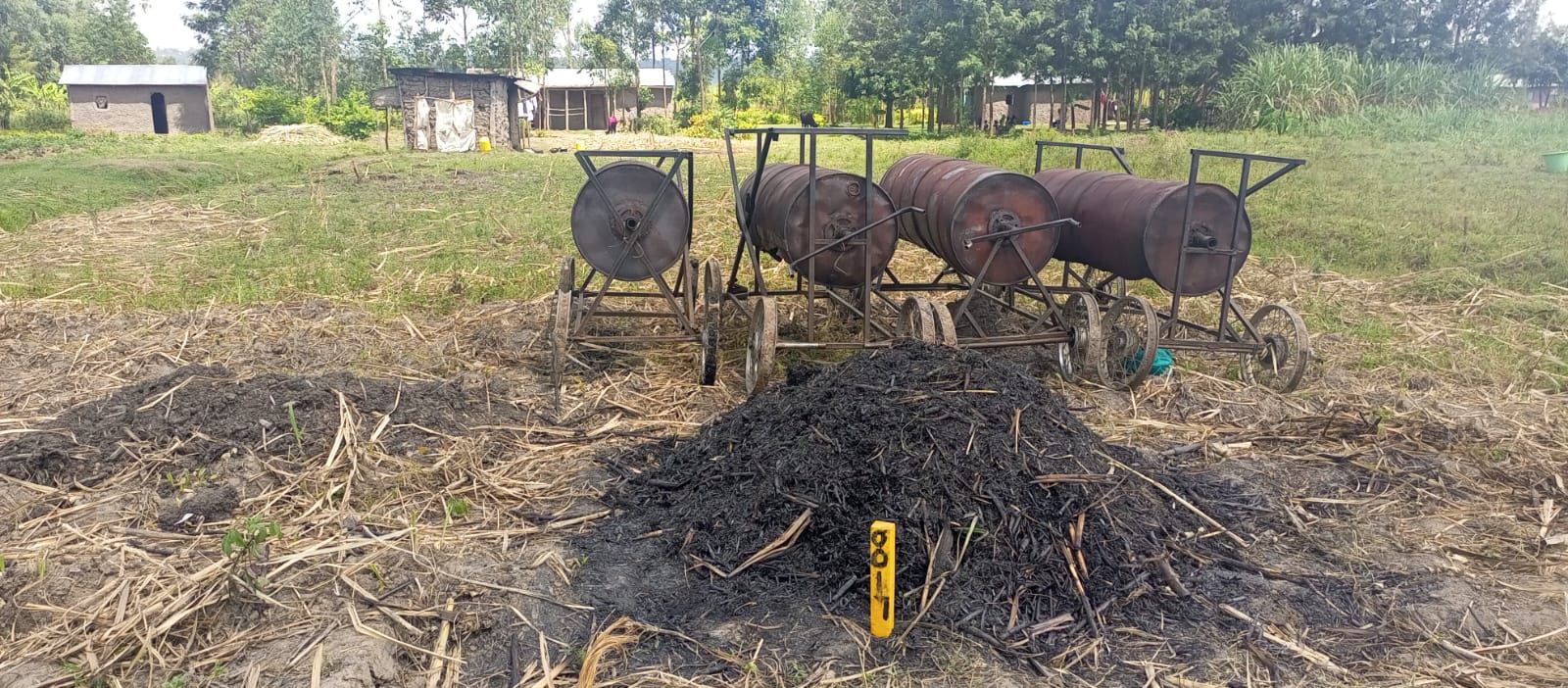
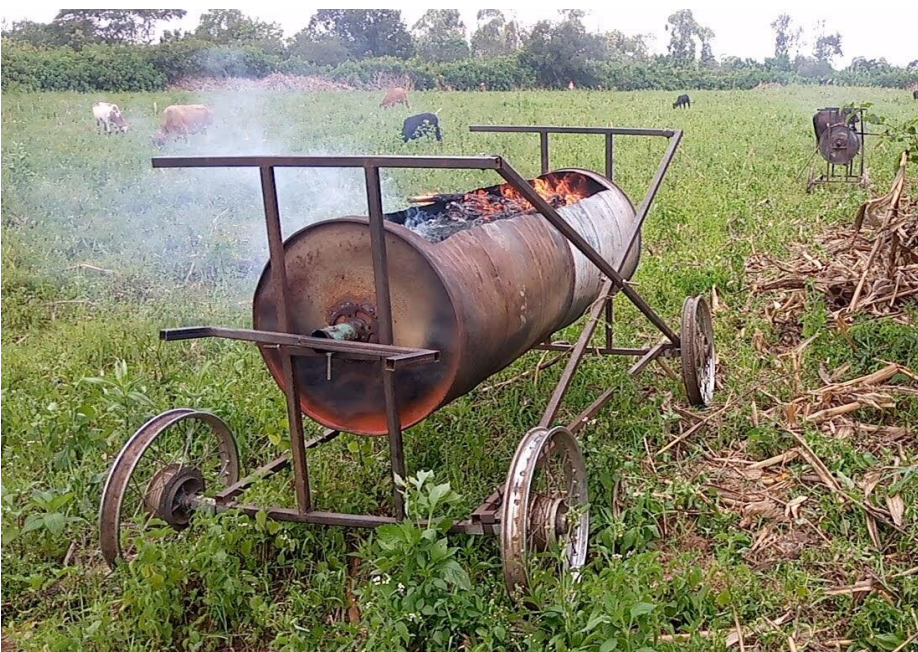
Biochar Pamoja's flagship farming programme turns that waste into an asset. Farmers are trained to produce biochar from their own residues using RoCC and Panel kilns, then apply it to their fields as a permanent soil amendment increasing yields, reducing synthetic fertiliser dependence, and generating verified carbon credits.
Since pilot projects in Bungoma County began, the programme has demonstrated consistent maize yield increases of 20–30%, confirmed by independent field measurements, while removing over 170 tonnes of CO₂e from the atmosphere.
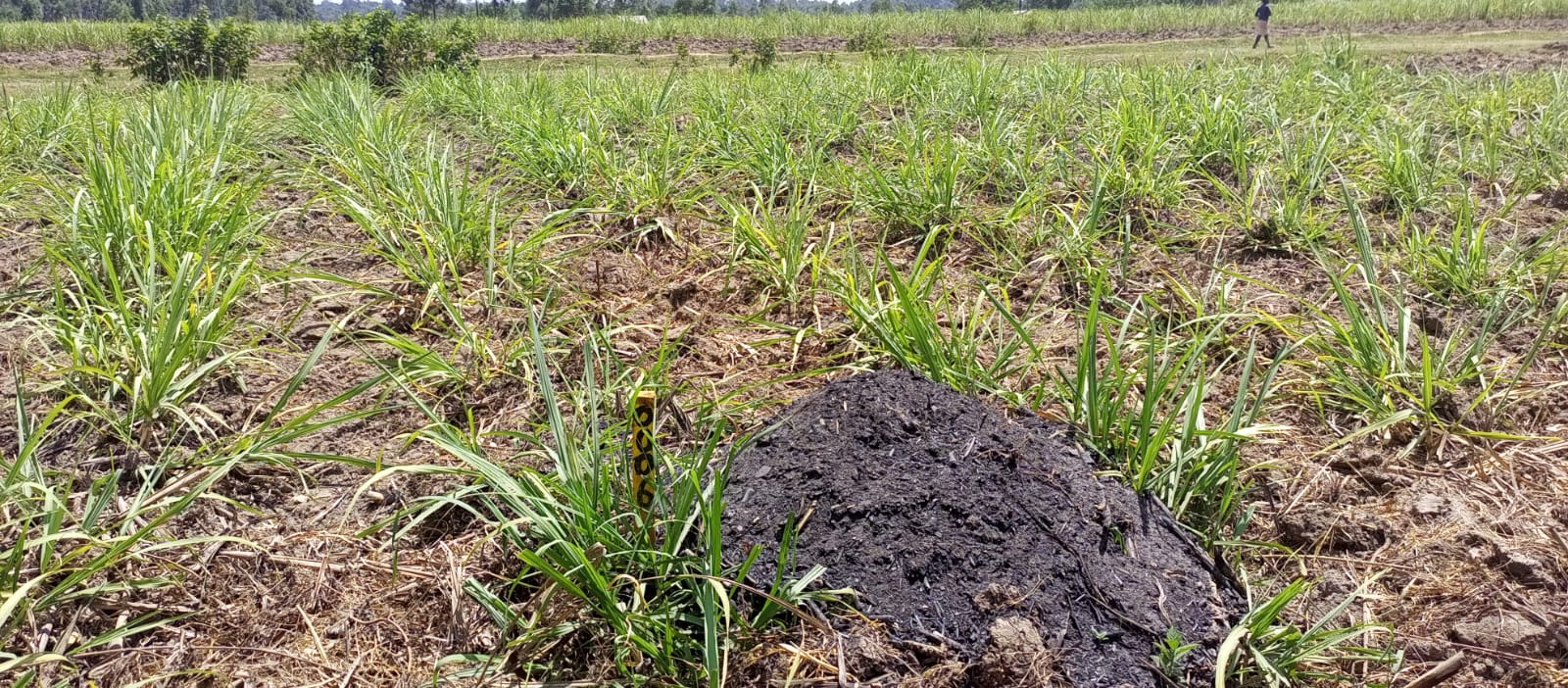
Measured field results from Bungoma County pilot farms.
Field measurements from Bungoma County, 2022–2023 season. Results vary by soil type and biochar application rate.
The science and community impact behind every tonne of biochar applied.
Biochar's porous structure holds water in the soil, reducing drought stress during dry spells. Bungoma farmers report up to 40% less irrigation requirement after biochar application.
Western Kenya's red soils tend to be acidic. Biochar raises pH, increasing nutrient availability and reducing the amount of lime farmers need to purchase each season.
Each tonne of biochar incorporated into soil represents ~2.2 tonnes of CO₂e permanently removed. Farmers earn carbon credit income on top of their improved harvests, a direct financial incentive.
Crop residues that were previously burned openly, releasing smoke and CO₂ are now feedstock for biochar. This eliminates a local air quality problem while creating value on the farm.
A four-phase pathway from training to carbon credit earnings.
3-day hands-on training on kiln operation, biochar quality testing, and field application rates. Delivered via women's groups and cooperative networks.
Farmers collect crop residue and produce biochar using shared kilns. Production is logged with GPS coordinates and photos.
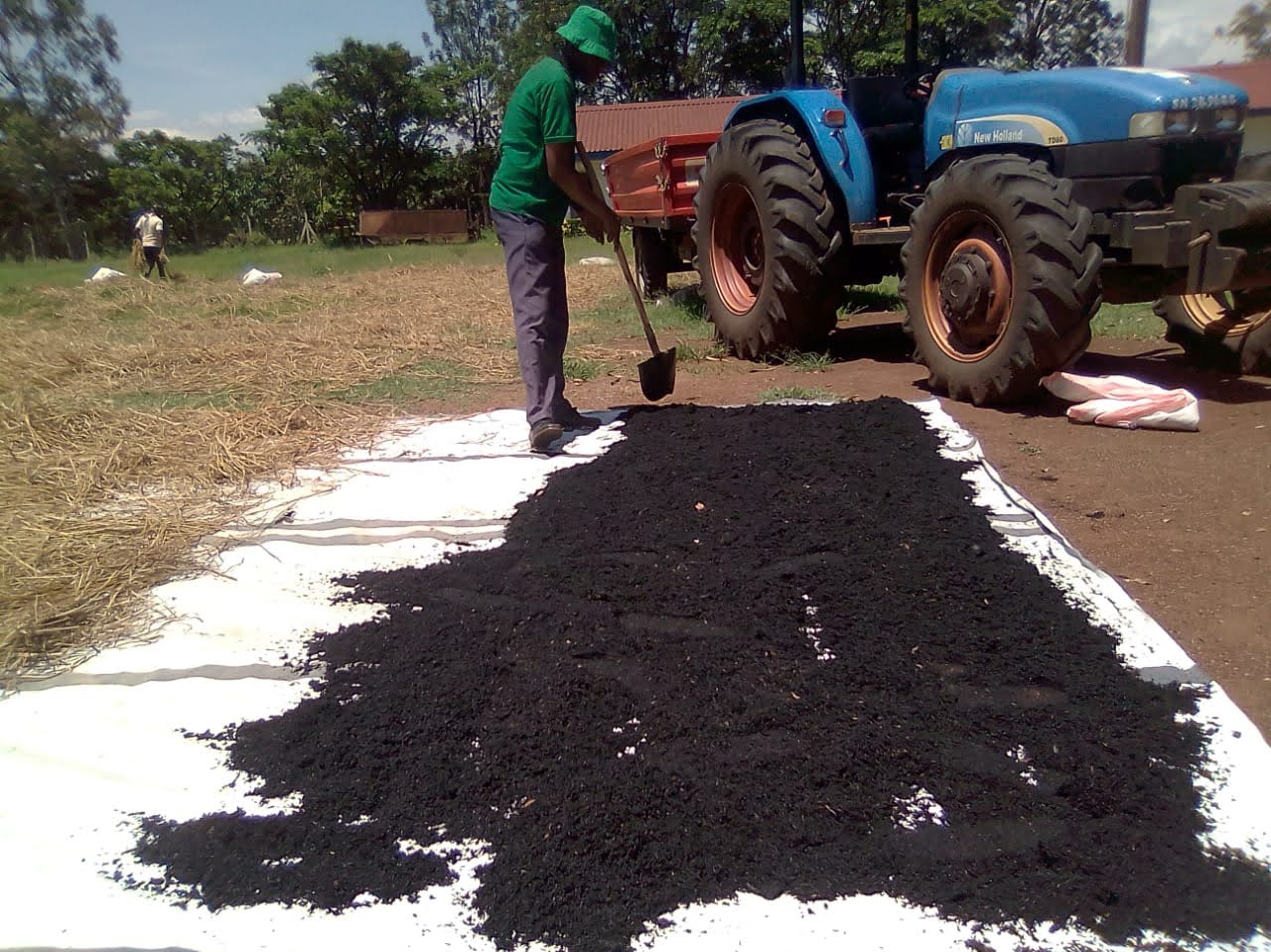
Biochar is crushed, mixed with compost or manure, and incorporated into soil at planting. Application rates and field GPS are recorded for verification.
Verified removals are issued as carbon credits. Revenue is split between farmers and the programme giving smallholders a new, recurring income stream.
Real stories from Bungoma County farmers.
"Before biochar, I was spending more on fertiliser every season. Now I use half the amount and my maize is taller and greener. It has changed how I farm."
"We used to burn our sugarcane trash every harvest. Now we turn it into biochar and put it back in the soil. The difference in our crops after two seasons is very clear."
"The women in our group were the first to try it. When others saw our yields, they wanted to join too. Now we have over 30 members making biochar together every season."
We partner with cooperatives, county governments, and NGOs to scale biochar adoption across Kenya.