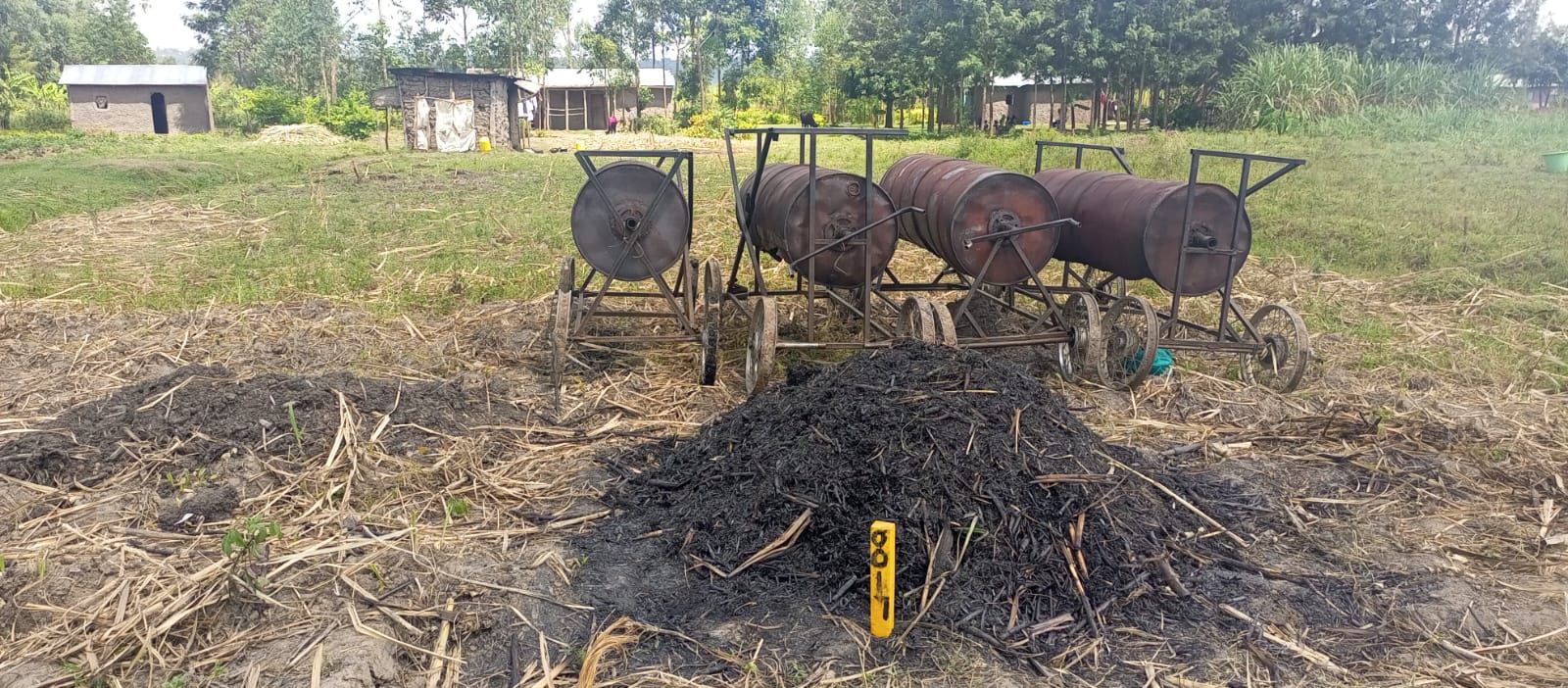
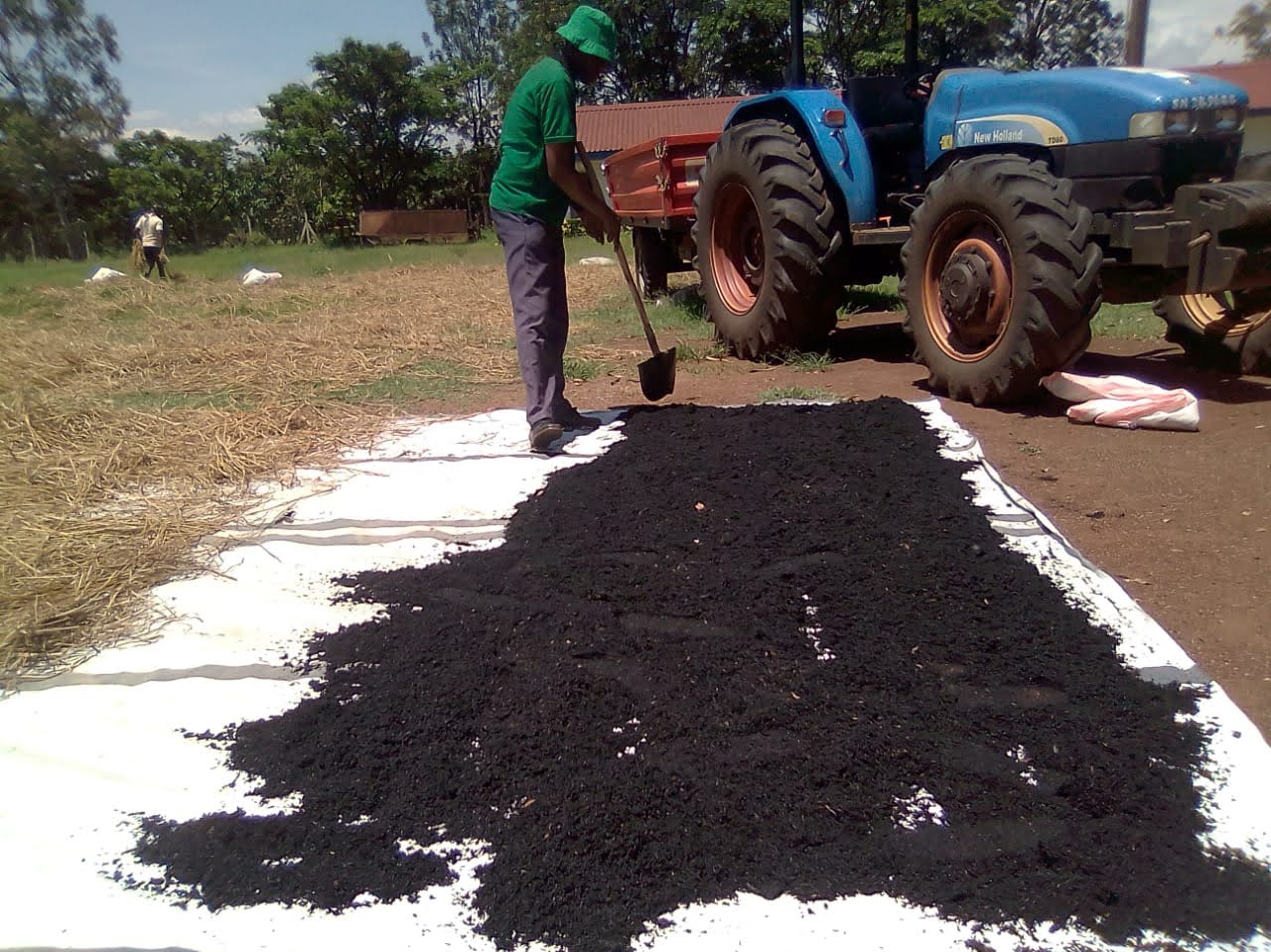
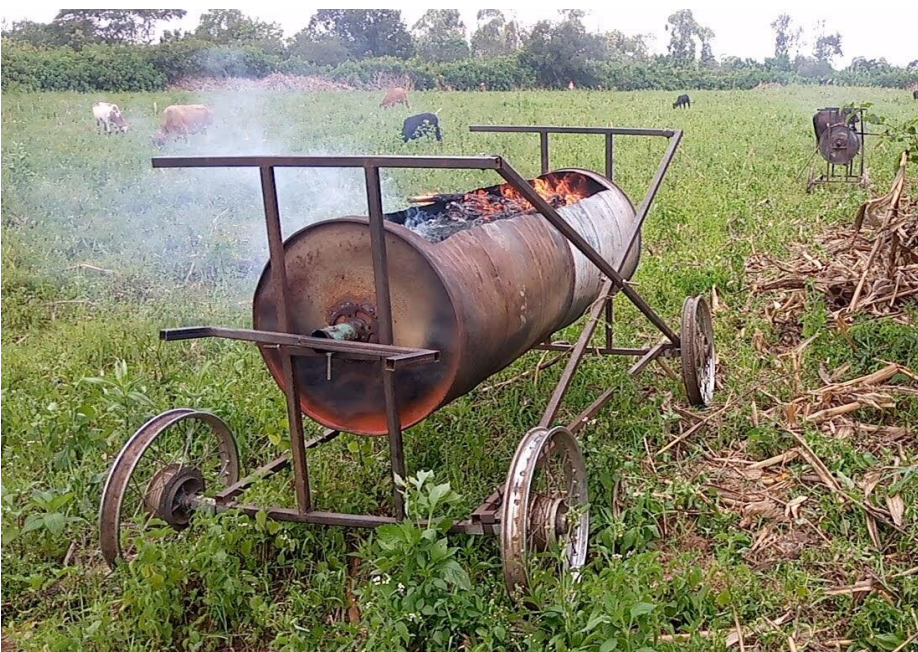
Kenya's first fabricated Retort-Optimized Cone Kilns tested in Kisii, Nyakach, and Ahero in collaboration with Kisii University and KMFRI.
The RoCC (Retort-Optimized Cone Kiln) was designed by Dr. Paul S. Anderson "Dr. TLUD" as a scalable solution for producing high-quality biochar from agricultural waste. Unlike open-burn methods, the RoCC kiln uses a retort mechanism to capture combustion gases and combust them cleanly, dramatically reducing emissions while maximizing biochar yield.
In 2021, Biochar Pamoja partnered with Kisii University to fabricate the first RoCC kiln units ever built in Kenya. These were then field-tested across three sites: Kisii, Nyakach, and Ahero generating critical local data on performance, feedstock suitability, and farmer adoption.
A four-stage pyrolysis process that turns crop residue into stable biochar.
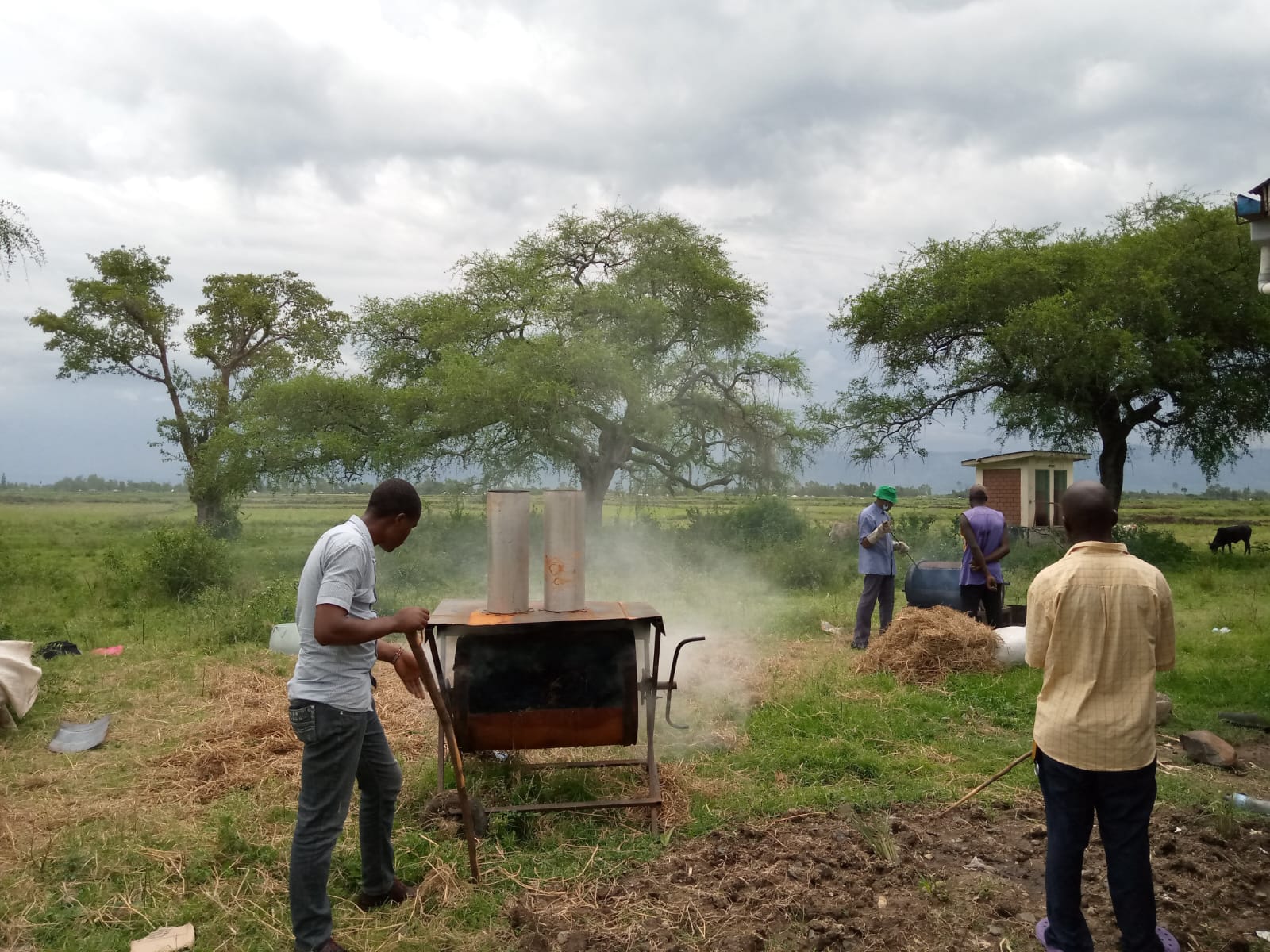
Agricultural biomass (maize cobs, sugarcane bagasse, rice husks) is packed into the cone kiln. The top layer is ignited, initiating top-lit combustion that burns downward.
As the flame front moves down, the biomass below undergoes oxygen-limited thermal decomposition (pyrolysis), converting it to biochar without burning it away.
The retort design routes syngas and volatile compounds back through the combustion zone, burning them cleanly and providing additional heat dramatically cutting smoke and emissions.
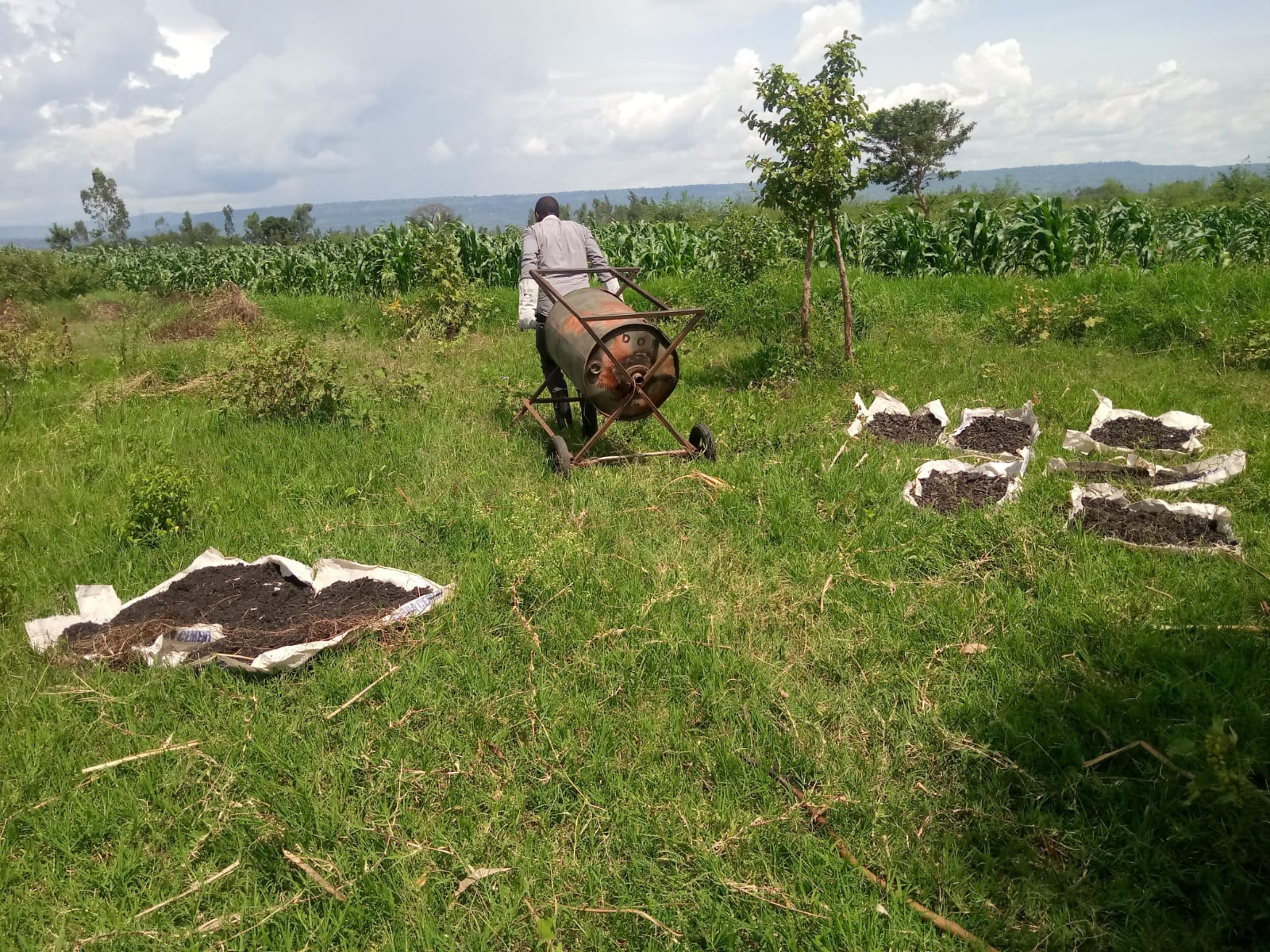
Once pyrolysis completes, the biochar is quenched with water to stop combustion. The resulting stable carbon is crushed, quality-tested, and applied to farm soils or sold as carbon credits.
| Kiln Type | Retort-Optimized Cone (RoCC) |
|---|---|
| Designer | Dr. Paul S. Anderson (Dr. TLUD) |
| Fabrication | Kisii University, Kenya (2021) |
| Feedstock | Maize cobs, sugarcane bagasse, rice husks, wood waste |
| Biochar Yield | ~25–35% of dry biomass weight |
| Carbon Stability | H/C ratio <0.7 (IBI standard) |
| Pilot Sites | Kisii, Nyakach, Ahero |
| CO₂e Removed | 170+ tonnes (to 2023) |
What we learned from Kenya's first field-tested RoCC kilns.
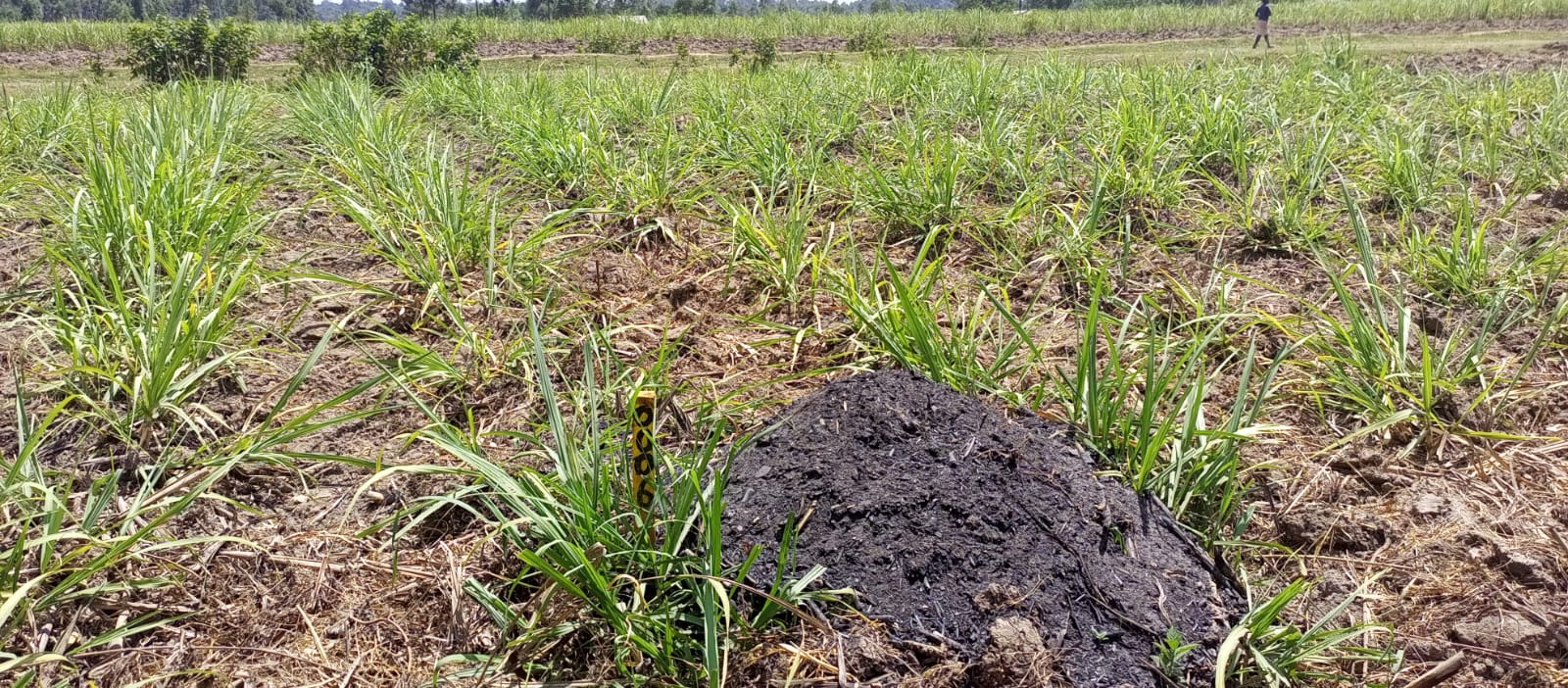
Biochar applied in Bungoma County pilot farms showed maize yield increases of 20–30%, improving water retention and reducing fertiliser requirements in the region's tropical soils.
By 2023, over 170 tonnes of CO₂e had been durably removed and verified setting the foundation for Biochar Pamoja's transition to GPS tracking and photograph records.
The Kisii University partnership demonstrated that RoCC kilns can be fabricated cost-effectively within Kenya, using locally available steel and skilled welders which is a key step toward regional scale-up.
Over 1,000 farmers across pilot counties were trained on biochar production, application rates, and soil amendment techniques for building a self-sustaining community of practitioners.
Agricultural residues that were previously burned openly or left to decompose are now feedstock for biochar production turning a waste problem into an economic and environmental asset.
Lessons from the RoCC pilots directly informed the 2024 transition to Panel Kilns have a more modular and scalable design.
From fabrication to field deployment — the RoCC kilns in action.
Collaborators who made Kenya's first RoCC kiln pilots possible.
We offer training, fabrication partnerships, and carbon credit pathways for organisations and counties across Kenya.